Sea-Watch in constant action. The crisis on the Mediterranean is not over
3 min read

Last Monday, the crew of the Sea-Watch 1 saved 27 people from distress at sea in the Aegean Sea. The EU-Turkey-deal is crumbling. In the following days, our reconnaissance airplane #Moonbird alone found seven boots off the Libyan coast. One of them sank at the very moment when it was spotted by the pilots. The number of crossings over the central Mediterranean route may have gone down initially, after the Italian state paid a militia for preventing the departure of refugee vessels according to media reports. However, the past week makes it more than clear that the humanitarian crisis on the Mediterranean is not over and that dirty deals with Turkey or Libya are no permanent solution.
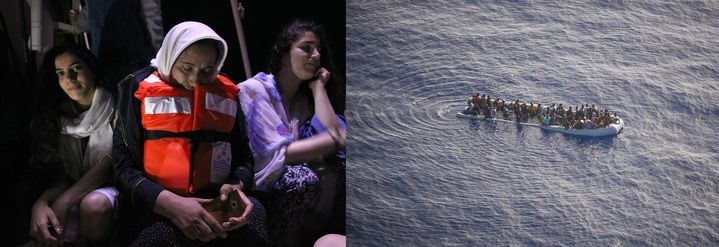
| Photos: A Syrian mother with her daughters on board the SW1, sinking rubber boat off the Libyan coast
On August 29th, the International Organisation for Migration announced that there had been no fatalities on the Mediterranean for three weeks. On August 30th, however, the lone survivor of a shipwreck, who swam back to the Tunisian beach (!), reported that 120 people had embarked with him. They have since been missing without a trace. During an operation of the ‘Seefuchs’ off the coast of Tunesia, rescued people reported two more boats that were obviously not found. “It is a mistake to believe that the humanitarian crisis at our borders is over. People are continuing to die in the Mediterranean Sea. Especially during last week, there were numerous emergencies at sea. More than 120 people would be dead now, if we had not spotted their boat from above at the very last minute”, says Ruben Neugebauer, head of the Sea-Watch air mission #Moonbird. “Nearly all remaining ships of the civilian fleet were running rescue missions last week, even though they are staying further north due to threats from the so-called Libyan Coastguard. This shows that it does not make a difference whether we run patrols just off the coast, as we have been repeatedly accused of. The situation in Libya remains terrible and the lack of safe and legal routes still forces thousands of people into the boats.” “On other migration routes, via Spain or the Aegean Sea for instance, the number of refugees is also rising. The Turkey deal is crumbling. This is why we have sent the Sea-Watch 1 on a monitoring mission there, where our crew was also called to a rescue operation”, says Axel Grafmanns, CEO of Sea-Watch. In August alone, 3121 people arrived on the Greek islands. The EU’s politics of fortification change nothing about the reasons why people flee, it only changes the migration routes and makes them even more dangerous for people in need. This is why we will continue our operations, on the water and in the air. This is why we are once again active in the Aegean and why we are currently equipping the Sea-Watch 3 in order to bring another ship into the rescue zone. “The European Union, including the future German government, has to to decide between human rights and fighting migration. The two are not compatible. Someone who wants to prevent human rights violations on the various migration routes needs to provide safe and legal entryways. Yet, in the rhetoric of the election campaign of 2017 even fundamental basic rights have become negotiable. “ says Sea-Watch executive Frank Dörner. “Deals with dodgy regimes cannot be the solution to the multiple crisis that are currently forcing more than 64 million people worldwide to flee, the past week has made this more than clear. We need a constructive debate about a migration policy that finally deserves the name. We must not let ourselves be herded like a pig through the village by right-wing populists.” Information for journalists: Should you have any questions concerning our rescue operations and the current situation on the Mediterranean, or if you want to accompany us on one of our operations, please contact us by email: presse@sea-watch.org You can find photo material of our operations for free use here: www.flickr.com/sea-watch |
Subscribe to our Newsletter