
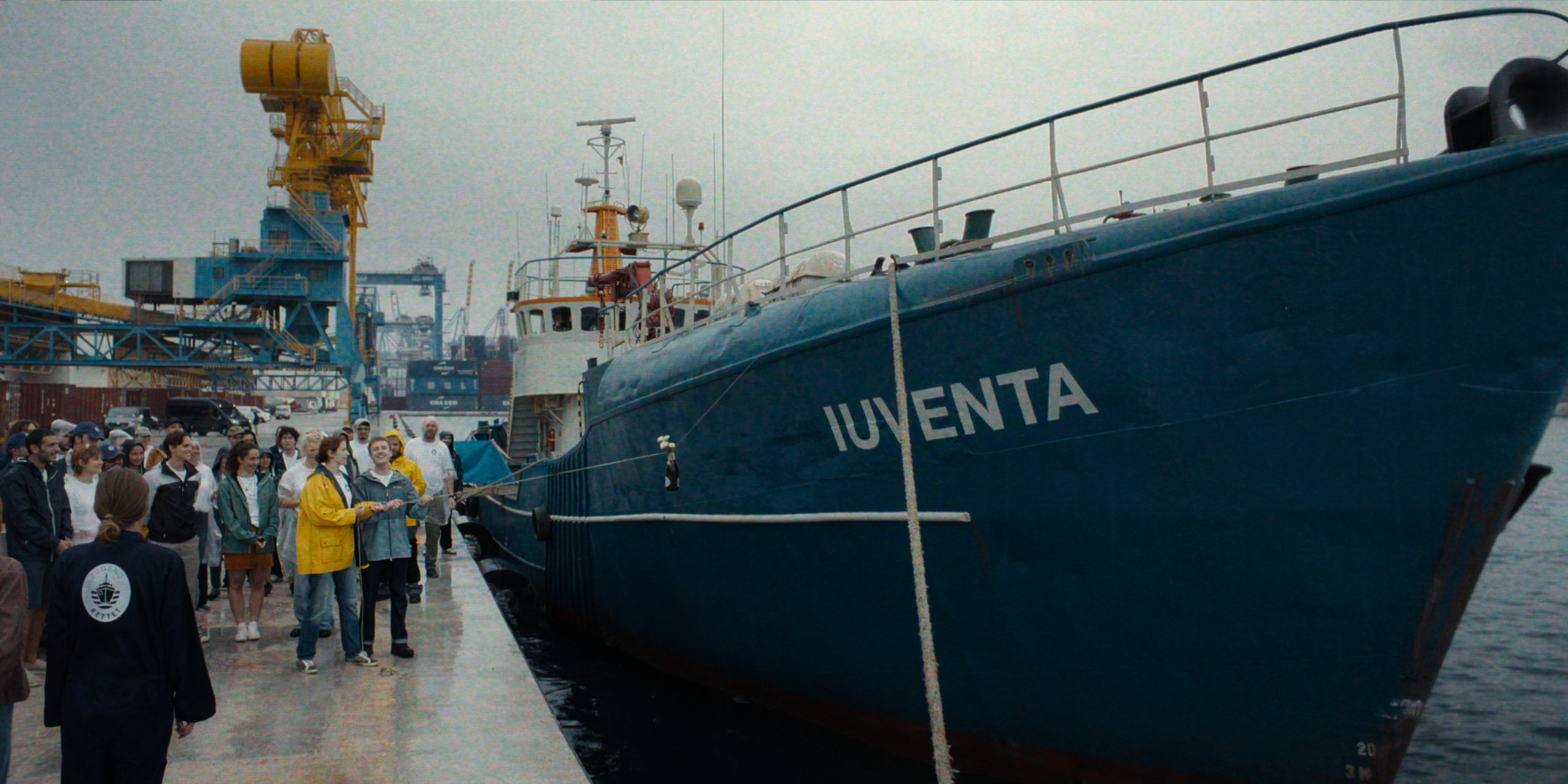
On 29 June, the new Netflix film “23,000 Lives” will have its world premiere at Filmfest München. From 17 July, it will be available worldwide on Netflix. The film tells the story of the Iuventa, a German rescue ship that saved people fleeing across the central Mediterranean until Italian authorities seized the vessel and brought charges against members of its crew. What the film depicts remains a reality today: people are dying because the EU prevents safe routes, refuses state-led rescue, criminalises civilian sea rescue and funds Libyan militias that use violence against people seeking protection and NGO vessels.
Louis Hofmann, lead actor:
“Thousands of people are still dying in the Mediterranean every year. This must never become normal. People are not dying there because rescue would be impossible, but because political decisions prevent it. The film is intended to encourage more people to look closely – and to take action.”
The Iuventa began operations in the central Mediterranean in 2016. During that time, the crew was involved in the rescue of more than 23,000 people. In 2017, the vessel was seized by Italian authorities, and criminal proceedings were initiated against crew members for aiding and abetting unauthorised immigration. The proceedings were criticised, among others, by the United Nations Special Rapporteur on Human Rights Defenders as an attempt at intimidation. After seven years, the case was finally dismissed. The judge ruled that all rescues had been necessary to enable people to flee the camps in Libya. Meanwhile, the Iuventa rusted in the port of Trapani and was returned as a wreck in 2024.
“Our story is now being told in a Netflix film – and it ended in an acquittal. But every year in Italy, hundreds of people seeking protection are sentenced to prison on the same charge, simply because they steered a boat while fleeing. Hardly anyone knows about this. That has to change,”
says Sascha Girke, member of the Iuventa crew and one of the defendants.
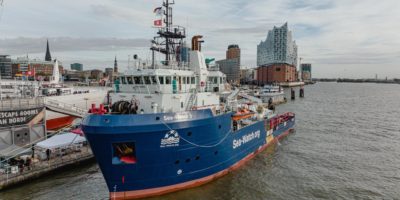
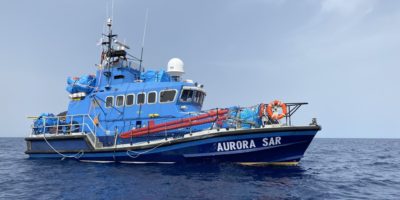
Numerous former Iuventa crew members are now active with Sea-Watch. Sea-Watch ships and aircraft are still operating in the same area where the Iuventa once sailed. The political reality that the Iuventa stood against continues to this day: the EU forces people seeking protection onto life-threatening routes, obstructs and criminalises civilian rescue, and outsources human rights violations to third countries.
Julia Winkler, spokesperson for Sea-Watch:
“The cooperation with Libyan actors and the outsourcing of severe violence also appear in the film. Today, this policy is being pursued on an even larger scale: the European Union pays Libyan militias to violently intercept people fleeing and abduct them to camps that the German Federal Foreign Office has described as ‘akin to concentration camps’.”
Just how current this policy remains became clear only in May 2026 during a rescue operation by the Sea-Watch 5. Armed Libyan actors identifying themselves as the Libyan Coast Guard fired shots and threatened to abduct the vessel to Libya. After its arrival in Italy, Italian authorities announced criminal investigations against Sea-Watch 5 captain Anne van Dam for aiding and abetting unauthorised immigration. This marks the first time in six years that criminal investigations have been opened against the captain of a civilian rescue vessel. In this respect, too, the film remains highly topical.