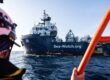
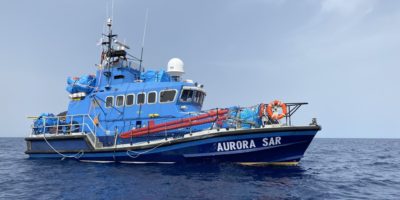

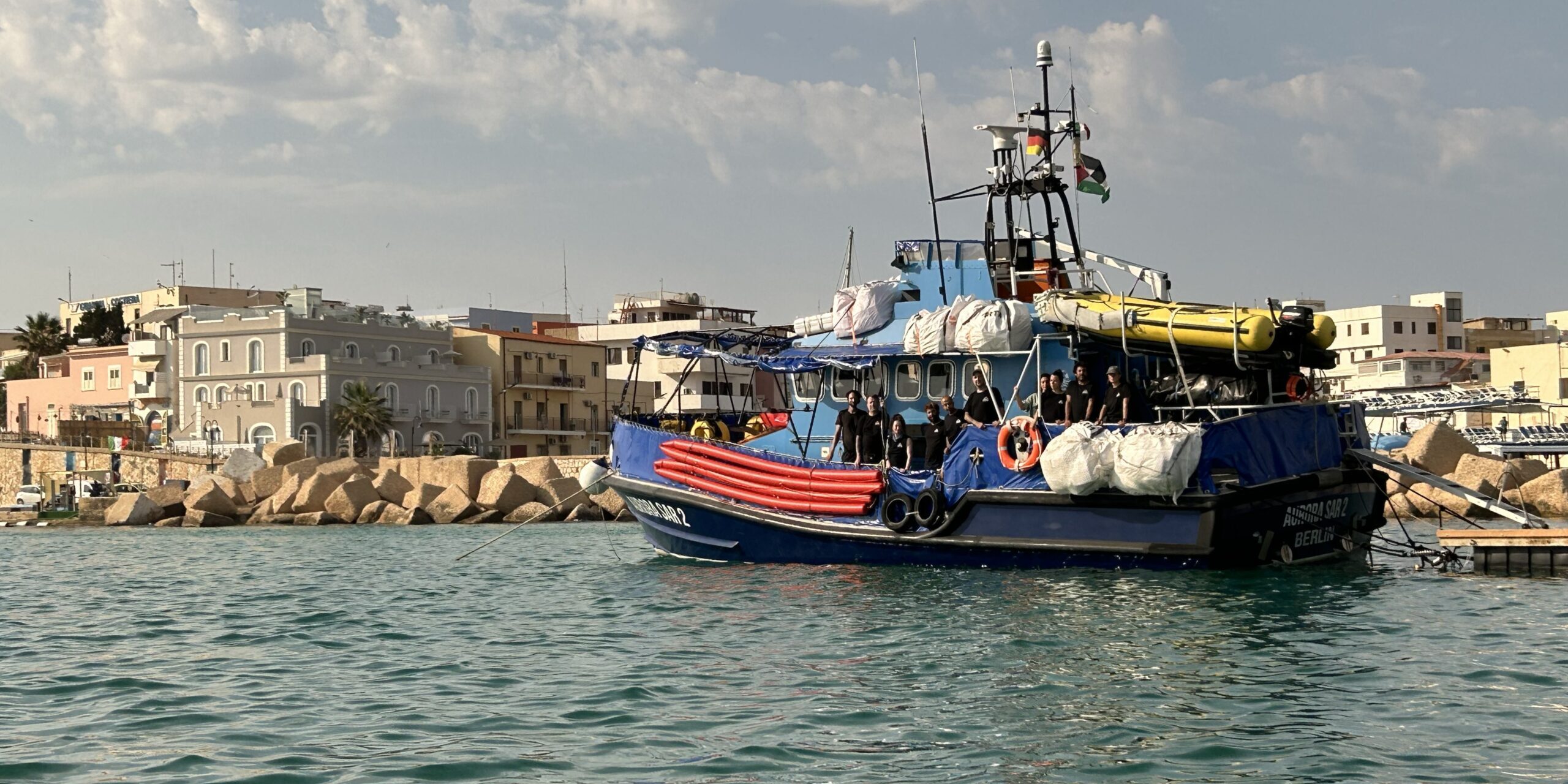
Berlin/Lampedusa, June 4, 2026 — Sea-Watch is putting a new rescue vessel into service: With the Aurora 2, the organization is responding to the repeated detentions of civilian rescue ships by the Italian authorities. Now, Sea-Watch will remain operational even when one of its ships is detained. While one ship is blocked in port, the other will be available to carry out rescue missions. The far-right government’s strategy of limiting rescue operations through arbitrary detentions has therefore failed.
Julia Winkler, spokesperson for the organization Sea-Watch:
“Italy is detaining rescue ships to stop people from being rescued. With the Aurora 2, we are making sure this strategy fails. If one of our vessels is detained, the other will be ready to save lives. By expanding our fleet, we are fighting back against the far-right Italian government’s efforts to obstruct civilian search and rescue at sea.”
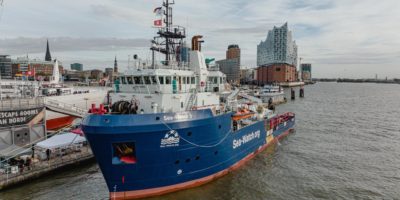
In the Mediterranean, speed is a matter of life and death. Every distress case is a race against time. That is why Sea-Watch operates not only the large vessel Sea-Watch 5 but also a smaller, faster ship—the Aurora. The Aurora reaches top speeds of up to 25 knots, allowing it to quickly reach people in distress at sea. With the Aurora 2, the organization is now specifically expanding its operational capabilities.
The acquisition of the Aurora 2 is a direct response to the far-right Italian government’s policy of systematically detaining civilian rescue ships. Since 2023, the Meloni cabinet has detained civilian sea rescue ships in port more than forty times. As a result, the entire civilian fleet has lost more than 900 days of operational time. The Aurora has also been blocked five times already. Italian courts subsequently overturned the rulings on several occasions. However, by the time the respective court decisions were issued, the Aurora had lost a total of 113 days of operational time.
With the Aurora 2, Sea-Watch is specifically countering this strategy. If one of the ships is detained, the other can continue to set sail and rescue people in distress at sea. In this way, the organization ensures its independence from bureaucratic blockades and guarantees the continuation of its rescue operations.
The detentions of civil search and rescue vessels are politically motivated and cost lives. The Mediterranean is one of the deadliest borders in the world. More than 34,000 people have been reported dead or missing since 2014. The actual number is estimated to be significantly higher. With its new ship, the Aurora 2, Sea-Watch can continue to quickly rescue people from drowning — even if one of its ships is blocked by the far-right Italian government.
Sea-Watch is part of the Justice Fleet, an alliance whose members are committed to upholding human rights and international maritime law. Its members refuse to comply with instructions provided for in the so-called Piantedosi Decree that conflict with international law and human rights obligations and are primarily intended to hinder rescue operations. As a result, their vessels are regularly detained by the Italian authorities. In recent months, Italian courts have overturned detention orders imposed on several Justice Fleet vessels in summary proceedings. Rulings on the overall legality of the Decree are still pending.