
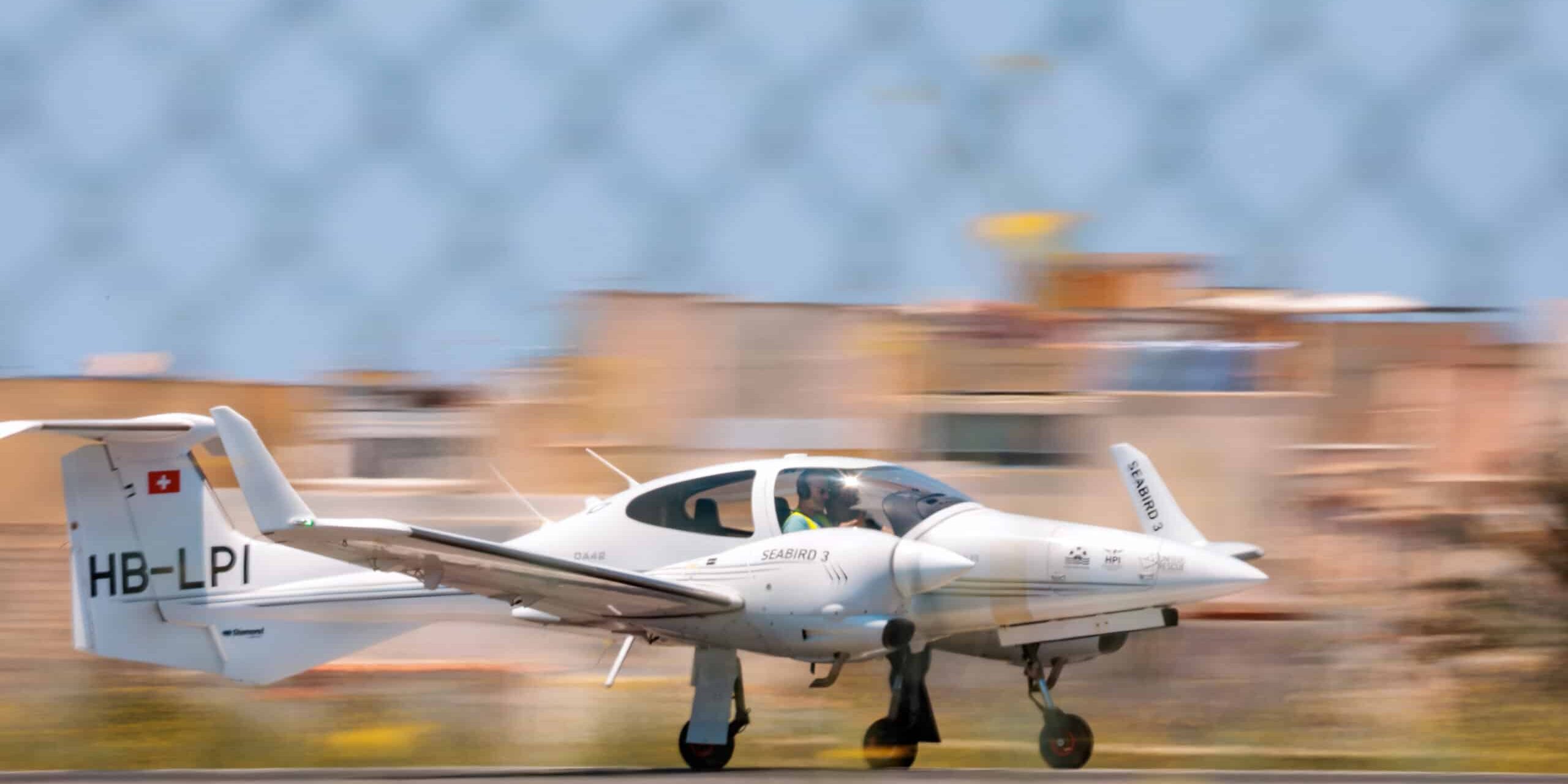
This factsheet provides a summary of political developments and operational updates regarding our ships and aircraft from January to July 2026.
Table of Content
- Executive summary
- Operational findings from our aerial operations
A. Overview of our aircraft’s documentation
B. Main operational trends - Political developments
- Selected cases from aerial monitoring and maritime operations
- Our vessels at sea
- Conclusion
Executive Summary
January – June 2026 at a glance
Sea-Watch aircraft conducted 76 missions and documented 44 boats in distress carrying more than 2027 people. More than 758 people were forcibly returned to Libya and Tunisia, while over 95 people’s fate remains unknown. Frontex continued to be involved in interceptions leading to returns to Libya without any transparency or accountability. Our Sea-Watch 5 was again attacked and shot at by Libyan militias. Italy further escalated the criminalisation of civil search and rescue through repeated detentions of NGO vessels and opening of an investigation against our captain to further intimidate our work. Courts increasingly questioned these practices, suspending several detentions of NGO rescue ships
The first half of 2026 was marked by continued human rights violations in the Central Mediterranean, increasing violence by Libyan actors, persistent shortcomings in European search and rescue coordination, and the further criminalisation of civilian search and rescue organisations.
Throughout the reporting period, Sea-Watch continued to document recurring patterns rather than isolated incidents. These included unlawful interceptions by Libyan actors, delayed or insufficient rescue coordination by European authorities, repeated failures to provide assistance to people in distress, and increasing reliance on merchant vessels and civilian rescue organisations to fill protection gaps at sea.
Sea-Watch also documented repeated involvement of the European Border and Coast Guard Agency Frontex in incidents that resulted in pullbacks to Libya or prolonged distress situations. While Frontex aerial assets were present in numerous operations, transparency regarding subsequent coordination, operational decisions and accountability remains absent.
At the political level, Italy further intensified its policy of obstructing civilian search and rescue. Rescue vessels continued to be detained under the Piantedosi framework for refusing to cooperate with Libyan authorities, despite growing judicial recognition that such cooperation conflicts with international law.
The reporting period was further characterised by an escalation of violence against civilian rescue actors. In May 2026, the Sea-Watch 5 was fired upon by armed units identifying themselves as the so-called Libyan coastguard shortly after completing a rescue in international waters. Despite repeated distress calls, neither European nor national authorities intervened to protect the vessel. Instead, criminal investigations were subsequently initiated against the shipmaster upon arrival in Italy.
At the same time, several Italian courts continued to question the legality of administrative measures imposed on civilian rescue organisations, suspending detentions or ruling on the merits of cases. These decisions further reinforce longstanding concerns regarding the compatibility of current Italian practices with international and European law.