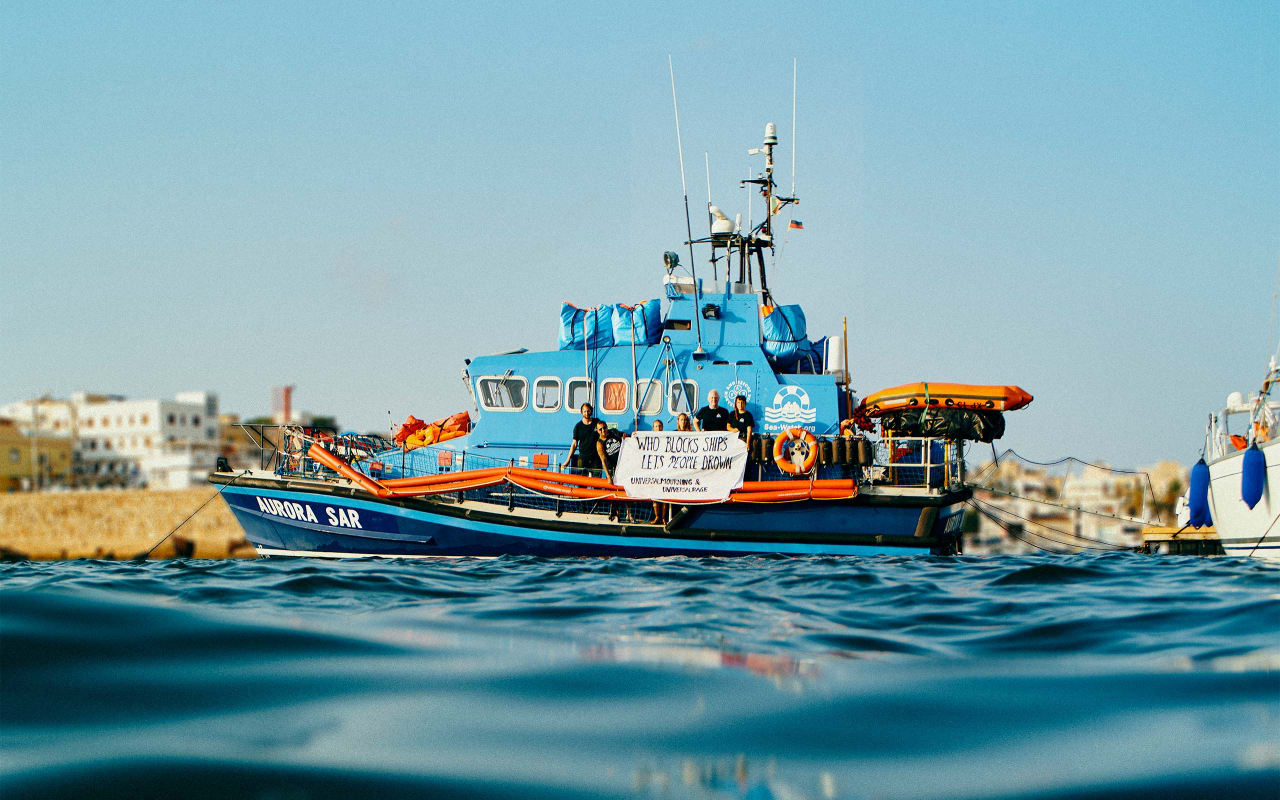
UPDATE: #united4med fleet engaged in difficult operations
4 min read

Two ships of the #united4med alliance have set sail despite of rough weather conditions thursday afternoon, to support the Spanish fishing vessel #NuestraMadreLoreto, that had run into difficulties during a storm. The vessel is stuck at sea with 12 people rescued out of maritime distress, for more than a week now, as still no port of safety was assigned. European authorities even suggested the crew to hand back the rescued to war-torn Libya. At the same time, the Sea-Watch 3 has to make a several hundred miles loop way, since it was denied to enter a port and refuel in Tunisia.
The humanitarian space at Europe’s deadly border is constantly shrinking, and both logistics for SAR operations, as well as the disembarkation of people rescued at sea is becoming a constant limbo, with a European Union that rather wants people to drown, than to see them arrive at European shores.
With the European policy to close the escape route through the Central Mediterranean sea by all means necessary, nowadays even disembarking seasick journalists and fueling can become an insurmountable obstacle. Earlier this week, the Sea-Watch 3 tried to seek shelter from the harsh weather conditions and to refuel in Tunisia, but the ship was denied to moor in a harbour. More and more countries cut all, even small logistical support for NGO Search and Rescue vessels, shirking their responsibilities or not wanting to be involved with the Mediterranean migration issue at all.
During the time waiting for the clearance, a journalist on board fell heavily seasick, at the same time technical problems arose with the machinery, that could have been easily avoided in port. Since there is no solution on the horizon, the captain had to decide to use the remaining fuel reserve to sail to another country for refuelling. This does not only mean high extra costs but also exposes the ship to the risk of severe damage in the machinery, since maintenance cannot be done. Furthermore, the seasick journalist now has to stay onboard for the whole loop way of several hundred nautical miles. Worst of all, the ship will be missing for days in the SAR zone, where every rescue vessel is urgently needed.
At the same time the other two ships of the #united4med fleet, Mediterraneas “Mare Jonio” and the “Open Arms” are engaged in a difficult operation to support the brave Spanish fishermen that had rescued 12 people out of maritime distress last week. In contrast to European governments, they are still upholding the rule of law on the Mediterranean. The request of the Spanish government to disembark the people in a Libyan port would be a breach of the Geneva Refugee Convention and a violation of the Non-Refoulement Principle.
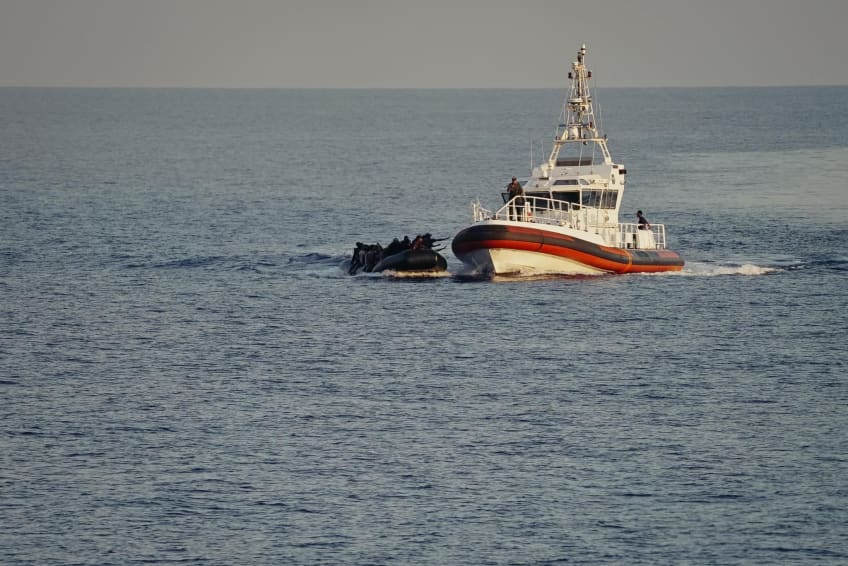
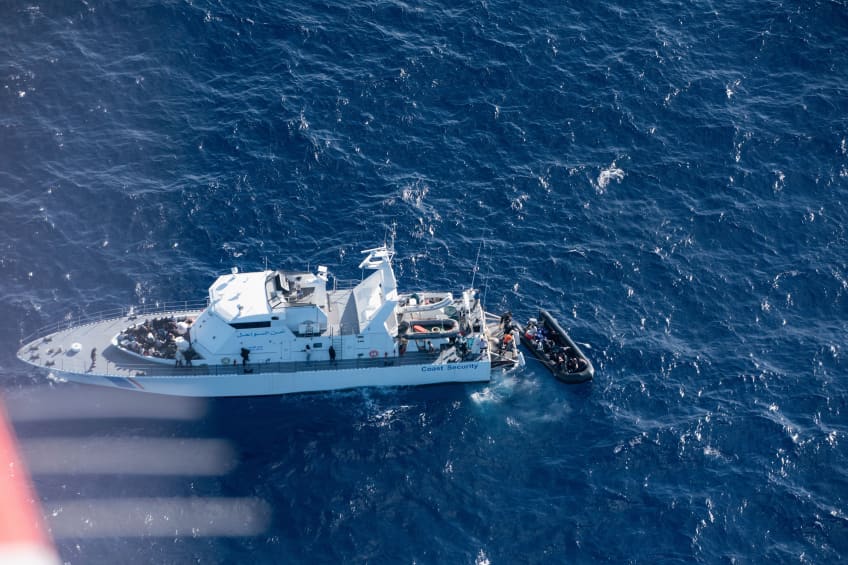
“Those brought back to Libya by the so-called Libyan Coast Guard are facing unlawful detention, torture and death. A Libyan port cannot be considered safe by any means,” says Sea-Watch chairman Johannes Bayer, current head of mission on the Sea-Watch 3.
The situation on the #NuestraMadreLoreto is tense due to the medical condition of the persons rescued and also since the fuel and food reserves do not last for long anymore. “This is why we are sending our ships, to ensure the safety of everyone involved” says Bayer.
Both situations show the shrinking humanitarian space at Europe’s sea border in which the restarted, urgently needed SAR Operations by the alliance take place. An Alliance at sea and on land, with the City of Valencia already offering its ports. An offer, which the captain of the Spanish fisher boat stated he would gladly accept, wanting to bring the people to a safe port, instead of handing the people over to war-torn Libya.
“The captain of the #NuestraMadreLoreto has shown that he has a better understanding of the applicable laws and that he has more integrity to uphold human rights at sea, than all European governments together”, says Bayer. “With the offer of many cities to welcome those rescued at sea, it would be easily possible to end this unworthy situation. As long as European governments are blocking any solution, we have to keep up the pressure to defend human rights at sea and to fight for a Europe of Solidarity.”
Subscribe to our Newsletter