3 questions to the crew of the Sea-Watch 3 – Pt. 4

1 min read

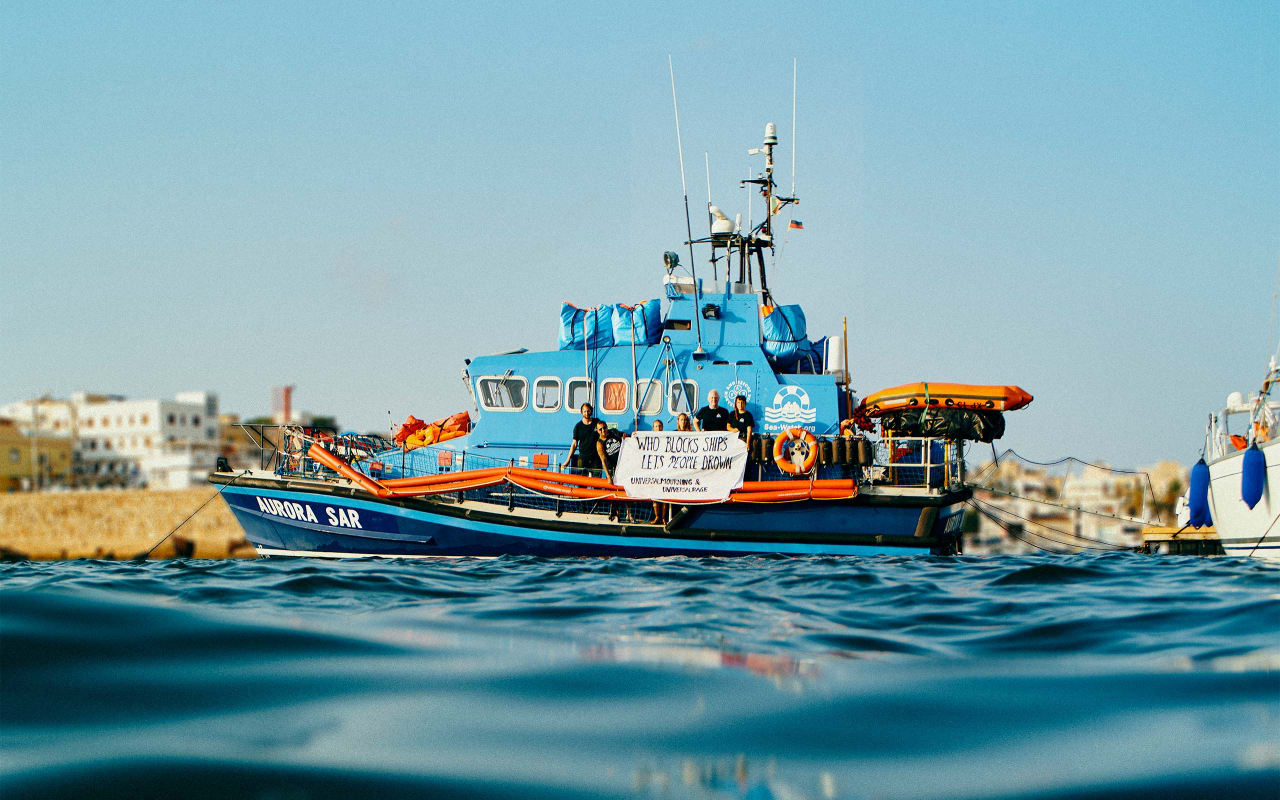
Photo: Sea-Watch / Copyright

We asked 3 questions to the shipyard crew of the Sea-Watch 3.

Kiki is on board as a deckhand. The shipyard is a way for her to be active with Sea-Watch without going to sea. Thanks to her help, the Sea-Watch 3 can go on its next mission as soon as possible.

If you describe the Sea-Watch 3 in three words, what would they be?

Three words? Sad reality, unfortunately. Because it makes me angry that Sea-Watch has to exist.

Why are you involved in the shipyard?

I don’t have any maritime certificates. The shipyard is a way for me to be active with Sea-Watch without going to sea. Through the experiences of the crew members who have already been on missions, I was able to learn a lot. They made me realize the dilemma that European foreign policy is throwing us into: a balancing act between our political stance and practical politics.

What is currently wrong in European politics?

Everything. Europe is letting drown those who made this European prosperity possible in the first place through exploitation. Our colonial structures have not changed until today. We must finally realize that our planet has no future like this.

More news

All news

Press Release

First Justice Fleet anniversary: major court wins for the new alliance

One year ago, 13 civilian search and rescue organisations cut all operational contact with the Libyan rescue coordination centre in Tripoli, thereby founding the Justice Fleet Alliance. Since then, their rescue ships were blocked 12 times by the Italian government, amounting to more than 300 days of lost operational time. However, Italian courts confirm the alliance's approach: six times, Italian courts set the ships free again shortly after their detention. Six additional blockades are under judicial procedure at the moment, and the alliance is awaiting their verdicts. While some legal proceedings are still ongoing, none has resulted in a final ruling against Justice Fleet members.

Press Release

2026 is the most violent year in the Mediterranean since 2016

A new report by the civil sea rescue organisation Sea-Watch documents 107 violent incidents by Libyan militias against migrants and refugees, as well as European actors in the Mediterranean since 2016. More than 70 per cent of these incidents of extreme violence, 80 in total, were carried out by the so-called Libyan coastguard. The report is being published shortly before the renewal of Germany’s EUNAVFOR MED IRINI mandate. The current version of the mandate contains no clause excluding the training of the so-called Libyan Coast Guard by the German armed forces (Bundeswehr).

Press Release

Frontex ignores rescue ship - but gives Libyan militia the coordinates of a boat in distress

A Frontex aircraft ignored repeated radio calls from the civilian rescue ship Solidaire, then promptly gave a Libyan militia the coordinates of a boat in distress, facilitating the illegal pullback of the people on board. Sea-Watch’s monitoring aircraft Seabird 2 documented the radio exchange in international waters off Libya, as well as the interception that followed. Frontex radio communications also indicate that Frontex staff share their aircraft positions via Telegram. The incident comes just one day after the European Commission proposed the largest expansion of Frontex to date.

Subscribe to our Newsletter

Fields marked with * are mandatory.
Transparente Zivilgesellschaft – We are part of the Transparent Civil Society Initiative: our figures and reports
Sea-Watch e.V. – Civil sea rescue at Europe’s bordersThis site is powered by Netlify